
Before a case is negotiated, mediated, or presented to a jury, the medical record has already established the facts. Accurate diagnosis, appropriate imaging, coordinated medical management, and objective documentation are essential to understanding the full extent of injury.
Elevation Health partners with attorneys by providing evidence-based evaluations, diagnosis-driven care, and clear medical reporting that helps legitimate injuries be accurately identified and understood.
A substantial percentage of individuals injured in motor vehicle collisions continue to experience persistent pain and functional limitations well beyond the expected period of tissue healing. These cases frequently involve injuries that extend beyond a routine sprain or strain and require a more comprehensive diagnostic approach.
When underlying injuries are underestimated, opportunities for appropriate imaging, specialist referral, and objective documentation may be missed. By the time litigation begins, those missed opportunities cannot always be recovered.
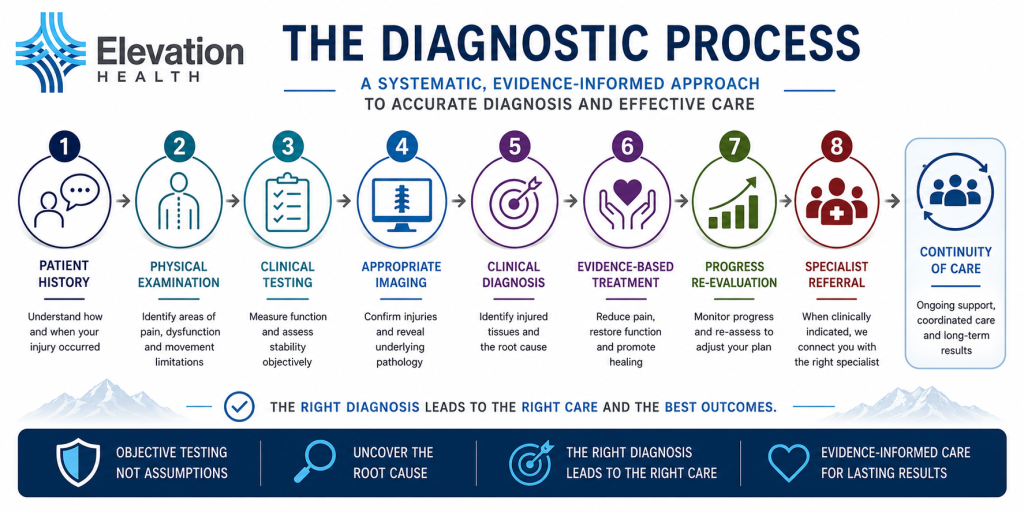
At Elevation Health, our clinical process is designed to identify injuries early, coordinate appropriate care, and develop a medical record that accurately reflects the patient’s condition from the beginning.
“Diagnosis—not assumptions—is the foundation of effective medical management.”
Not every collision results in a complex injury.
However, when ligament injury, spinal instability, disc pathology, neurological involvement, or persistent functional impairment are suspected, the clinical priorities change.
Our focus extends beyond symptom management. We emphasize:
Every clinical decision contributes to a medical record that is accurate, organized, and medically defensible.
| Routine Clinical Care | Diagnosis-Driven Medical Management |
|---|---|
| Focus on symptom relief | Focus on identifying injured tissues |
| General diagnoses | Tissue-specific diagnoses |
| Limited imaging | Imaging guided by clinical findings |
| Reactive referrals | Early specialist involvement when appropriate |
| Visit-by-visit notes | Integrated medical documentation |
| Care ends when benefits end | Care guided by clinical necessity |
The difference is not simply how patients are treated.
The difference is how injuries are identified, documented, monitored, and communicated throughout the life of the case.
Our role is not to advocate for either side.
Our responsibility is to provide objective medical opinions supported by clinical findings, diagnostic imaging, accepted scientific principles, and established standards of care.
Attorneys commonly request documentation addressing:
Each report is prepared with clarity, consistency, and attention to the medical issues most relevant to legal review.
Complex injuries often require more than one provider.
When clinically appropriate, we coordinate care with radiologists, orthopedic surgeons, neurologists, pain management specialists, physiatrists, and other healthcare professionals to ensure patients receive appropriate evaluation and treatment.
This collaborative approach helps ensure that medical decisions are driven by clinical need while creating a comprehensive and well-documented continuum of care.
When requested, Dr. Gary Lee provides independent medical review based on objective clinical findings, peer-reviewed literature, accepted biomechanical principles, and evidence-based clinical methodology.
These evaluations may assist attorneys in understanding:
Clinical independence remains the foundation of every opinion provided.
Clinical decisions guided by current research, accepted standards of care, and objective examination findings.
Treatment begins with identifying injured tissues through accurate diagnosis—not simply documenting symptoms.
Appropriate imaging and timely specialist referrals when clinical findings warrant further evaluation.
Clear, organized medical records that accurately communicate diagnoses, clinical findings, and patient progress.
Responsive communication with attorneys, specialists, and healthcare providers throughout the continuum of care.
Every medical opinion is grounded in objective evidence, ethical practice, and the patient's best interests.
If your practice values accurate diagnosis, objective documentation, coordinated medical management, and evidence-informed clinical opinions, we’d welcome the opportunity to discuss how Elevation Health can support your clients.
When medicine is practiced objectively and injuries are thoroughly evaluated, documented, and managed, attorneys have the information they need to advocate effectively for their clients.
Whether you’re evaluating a new case, seeking an independent clinical perspective, or looking for a medical partner experienced in the management of complex motor vehicle injuries, we’d welcome the opportunity to discuss how Elevation Health can support your clients.