
The Science Behind Spinal Alignment and Nervous System Function
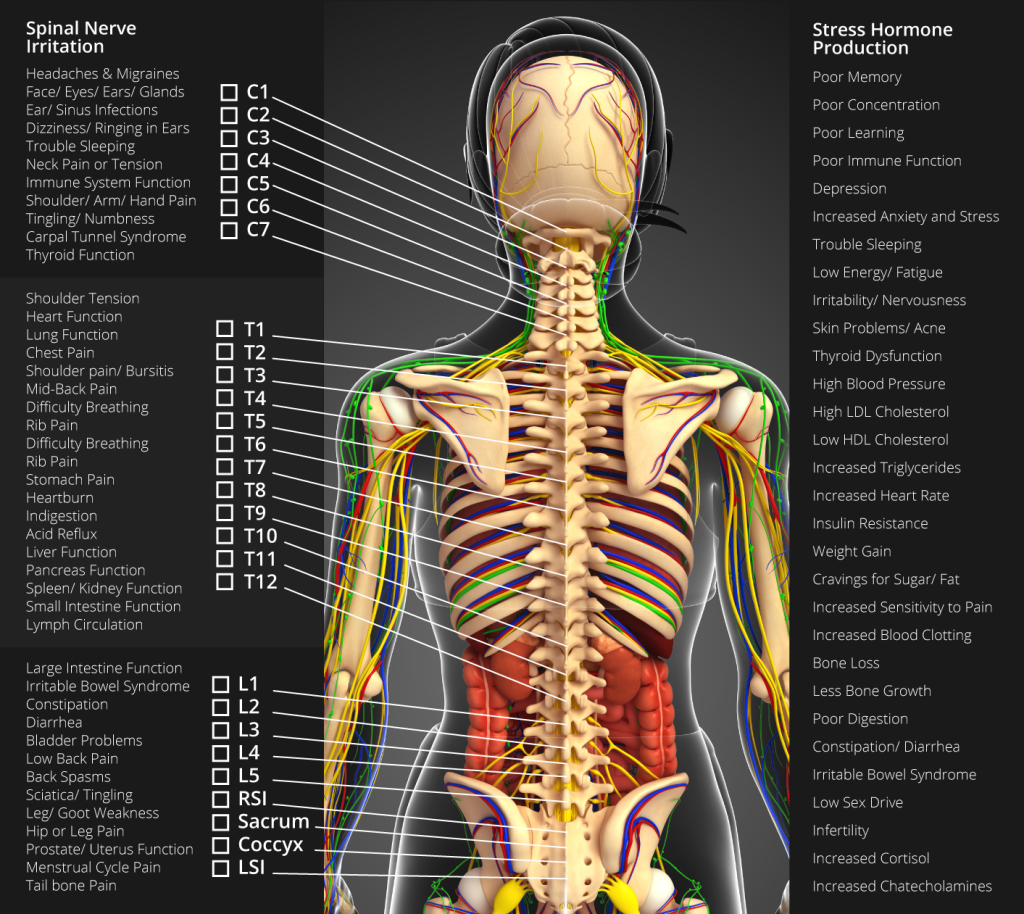
The spine does more than support the body—it protects and influences the nervous system, which controls every movement, sensation, and internal process. When spinal alignment is healthy, the nervous system operates under minimal mechanical stress. When alignment is compromised—especially after being injured in a car accident—that balance is disrupted, often leading to pain, dysfunction, and reduced resilience.
Understanding the relationship between spinal alignment and nervous system function explains why corrective chiropractic care focuses on structure, not just symptoms.
The Spine–Nervous System Relationship
The brain and spinal cord form the central nervous system, which communicates with the rest of the body through a complex network of nerves. These structures are housed within the spinal column, making spinal alignment critically important.
The spine’s natural curves are not accidental. They are engineered to:
- Absorb shock
- Reduce tension on the spinal cord
- Distribute mechanical forces evenly
- Allow efficient movement
When these curves are altered—through poor posture, repetitive stress, or trauma—the nervous system is exposed to increased mechanical strain.
How Misalignment Affects Nerve Function
Spinal misalignment does not typically “pinch” nerves in dramatic ways, as is sometimes assumed. Instead, it creates chronic tension and altered biomechanics that interfere with normal nerve signaling.
Common consequences of poor alignment include:
- Increased spinal cord tension
- Altered joint motion that irritates nerve roots
- Muscle imbalance that changes movement patterns
- Heightened sensitivity to pain signals
Over time, these changes can lead to chronic neck or back pain, headaches, and reduced tolerance for physical or mental stress.
Trauma and Nervous System Stress After a Car Accident
Car accidents introduce sudden forces that the spine and nervous system are not designed to handle. Even when no fracture occurs, the rapid acceleration and deceleration of the head and torso can:
- Stretch spinal ligaments
- Alter spinal curves
- Increase tension along the spinal cord
Whiplash injuries, in particular, are known to change cervical alignment. When the natural curve of the neck is lost or reversed, the spinal cord may experience increased strain during everyday activities such as sitting, driving, or looking down at a phone.
This ongoing stress helps explain why some patients experience lingering symptoms long after an accident, even when initial pain treatments seemed effective.
Why Symptoms Can Be Widespread
Because the nervous system controls the entire body, spinal misalignment can produce symptoms that seem unrelated at first glance. Patients may report:
- Neck or back pain
- Headaches
- Shoulder or arm discomfort
- Balance issues
- Fatigue or reduced endurance
These symptoms are not “all in the head.” They often reflect how altered spinal mechanics affect nervous system efficiency.
Correcting alignment reduces abnormal stress, allowing the nervous system to function in a more stable and predictable environment.
Measuring Alignment to Understand Neurological Stress
One of the challenges in spinal care is that nervous system stress cannot be seen directly. Instead, it is inferred through objective measurements of spinal alignment.
Digital X-rays and posture analysis allow doctors to assess:
- Spinal curve integrity
- Head and torso position relative to gravity
- Segmental alignment after trauma
These measurements help identify whether the nervous system is likely operating under increased mechanical strain—and whether corrective care is warranted.
How CBP Supports Nervous System Health
Chiropractic Biophysics® (CBP) was developed to restore spinal alignment using biomechanical principles and measurable outcomes. Rather than focusing solely on mobility, CBP emphasizes structural correction.
CBP care typically includes:
- Precise spinal adjustments
- Mirror-image corrective exercises
- Specialized traction to restore spinal curves
Corrective traction is particularly important because it applies sustained forces that encourage the spine to adapt structurally over time. As alignment improves, abnormal stress on the spinal cord and nerve roots is reduced.
Patients often report improvements not only in pain, but also in movement confidence, endurance, and overall function.
Nervous System Recovery Takes Time
Just as spinal alignment does not deteriorate overnight, nervous system recovery is a gradual process. Corrective care requires consistency and periodic reassessment to ensure meaningful progress.
This is especially true for patients injured in car accidents, where trauma-related changes may be more pronounced and require longer correction timelines.
The Elevation Health Perspective
At Elevation Health, spinal alignment is viewed as a foundational component of nervous system health. Care is guided by objective data, not assumptions.
Patients are educated on how their alignment affects nervous system function and why corrective care is essential for long-term recovery—particularly after trauma.
Why Alignment Matters for the Future
When spinal alignment remains compromised, nervous system stress becomes the new normal. Over time, this can contribute to chronic pain, early degeneration, and reduced adaptability to physical demands.
Corrective chiropractic care aims to reverse that trajectory—restoring healthier biomechanics so the nervous system can operate with less strain and greater efficiency.
Why Alignment Matters for the Future
When spinal alignment remains compromised, nervous system stress becomes the new normal. Over time, this can contribute to chronic pain, early degeneration, and reduced adaptability to physical demands.
Corrective chiropractic care aims to reverse that trajectory—restoring healthier biomechanics so the nervous system can operate with less strain and greater efficiency.